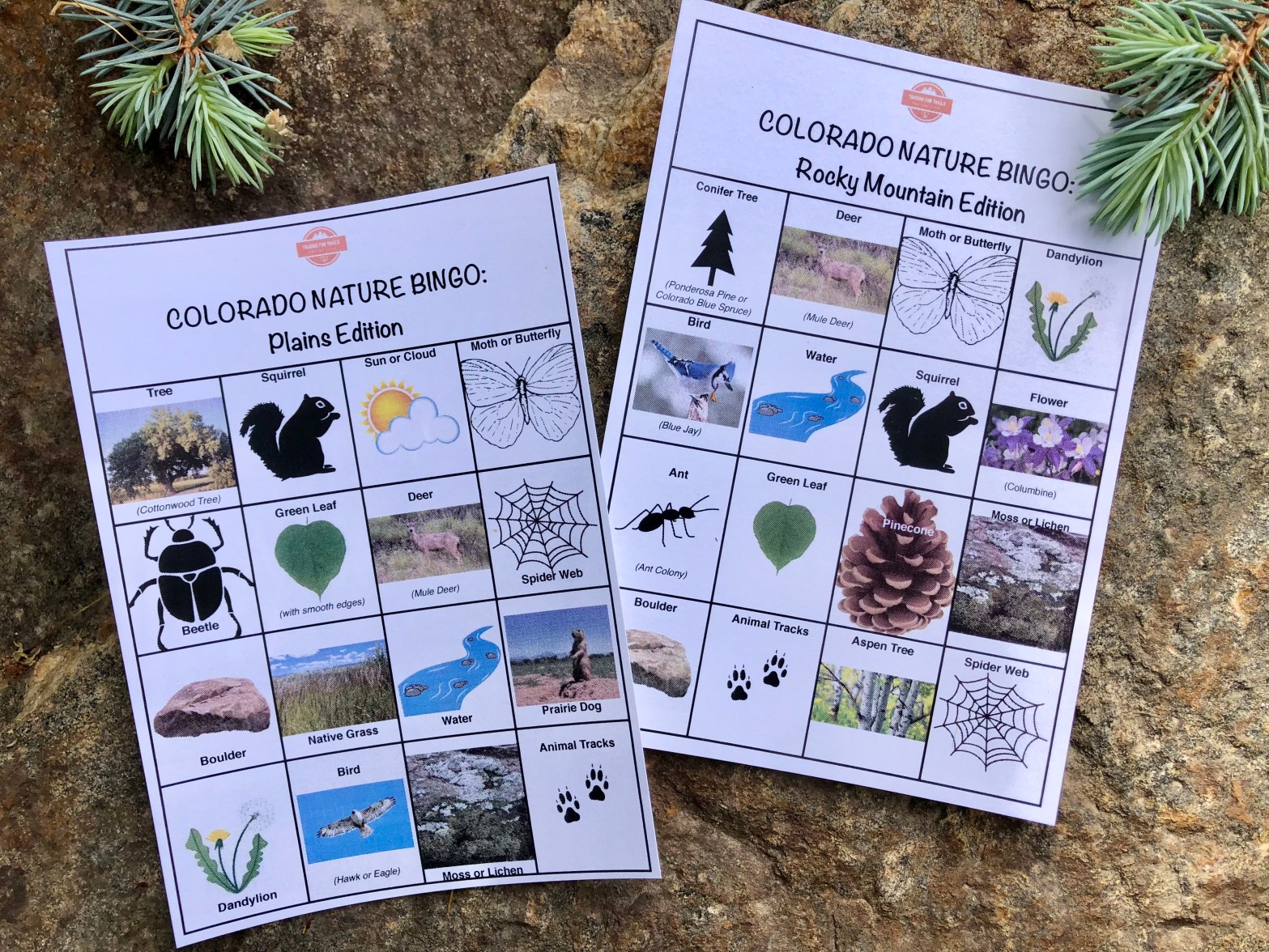
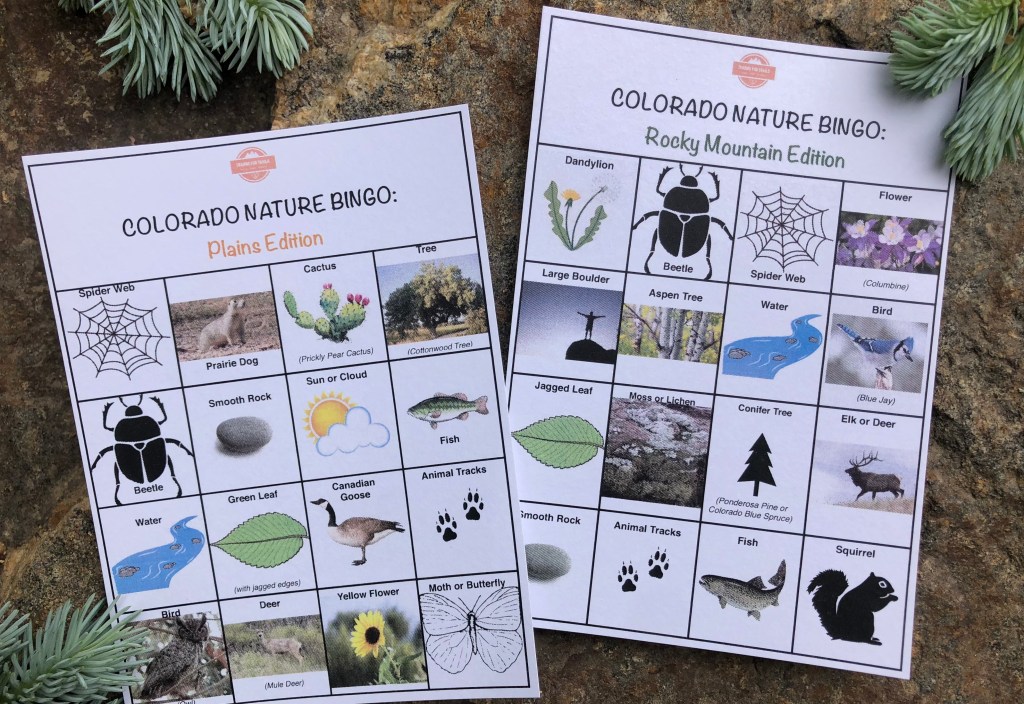
Free Download of Rocky Mountain Version &/or Plains Version
As a mom and former elementary school teacher, I’m always looking for creative ways to engage kids in their natural surroundings. What better way than through BINGO? Better yet…how about a Colorado-themed one?
So in preparation for an upcoming kid-friendly group hike at Barr Lake State Park (located just NE of Denver), I began perusing Pinterest for Nature Bingo templates. I figured a game would be a fun addition to the hike. While there were plentiful options, I had hoped to find a more localized/habitat-specific option for our participants. Welp, since that wasn’t available, I created one!
Since we reside on the Front Range of Colorado, we bridge both the Plains and Rocky Mountain regions, thus actually leading to the creation of two (2) downloadable versions reflecting each respective area. They’re both intended for fun at any age, from ‘trail tots’ to elementary kids (and older).


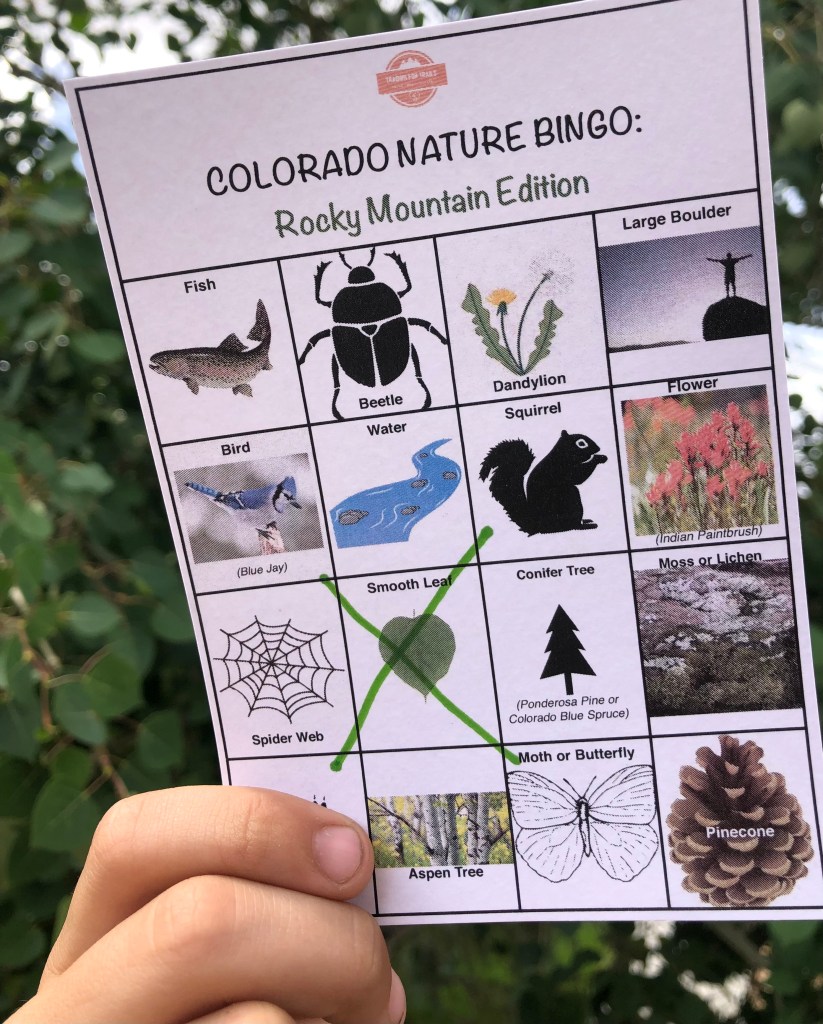
For the older kids, note the italicized wording within parentheses. These are intended to have them search for a more specific plant/animal/item related to a broader category. For example: “(Columbine)” found under “Flower“.
While young children may opt to disregard the extra information, parents/educators may utilize it to build youngsters’ knowledge-base or generate conversation. As in the previous example, the Columbine is Colorado’s state flower, which is a possible discussion point, or at very least, a bit of trivia.
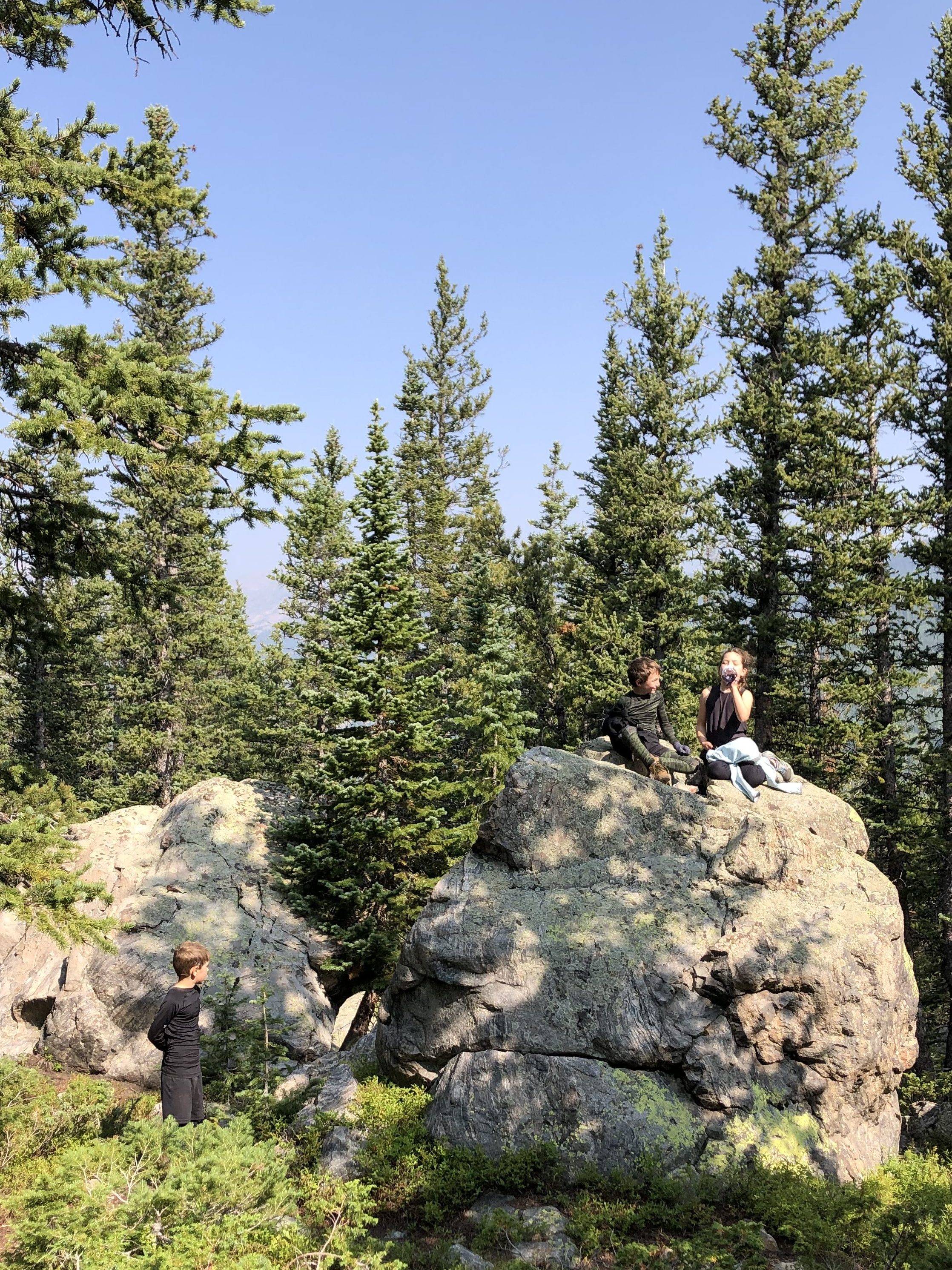
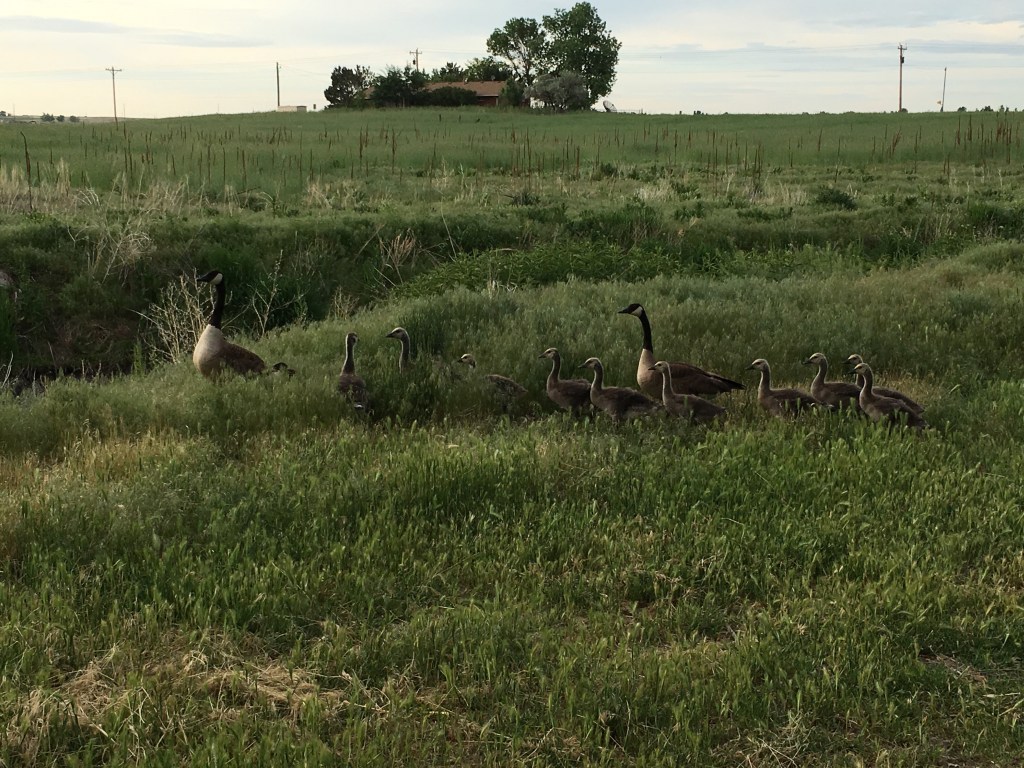
As you play Nature BINGO, I encourage you and your children to engage their senses. What do you hear or smell? Have fun asking their opinions and observations…it’s that simple!
Here are some other ideas for questions or conversation starters:
- What fish do you think live in this lake/river?
- Do you think Aspen trees grow best in groups (groves) or individually? Why?
- Do you notice where the Cottonwood Trees grow best?
- How do you think the Cottonwood Tree got its name? (the female trees release millions of cottony seeds in spring/summer)
- What is the difference between moss and lichen?
- Why do Prairie Dogs stand on their hind legs?
- What made this rock so smooth?…jagged? crystalize?
- What similarities and differences do you see between these Conifers (pine trees)?
- Where do you think _____ goes in winter?
- Why do you think the scales on a pinecone are either wide open or tightly closed?
- How old do you think that tree is/was? (each tree ring= 1 year)
- What do you notice about______?
- How many _____ can you count?
- What does that _____ (leaf/cloud/etc.) remind you of?
- What shapes do you see here in nature?
- Which is your favorite_____?
- Would you rather _____ or _____?
This game is intended to generate excitement, while building observational skills and knowledge, through connection with the natural environment and friends/family. But most importantly, just enjoy yourselves!
Please remember Leave No Trace principles when playing!
Download the Bingo Cards for free below:
How to Play: For this version of BINGO, you can play individually or as a group. Try to spot each item on the Bingo Card, like a scavenger hunt. Once you find an item pictured, mark it off with an ‘X’ using a pen/pencil. Once you have 4 items in a row crossed off (either horizontally, vertically, or on a diagonal), you have achieved BINGO. The first to yell out BINGO wins!
Modify the rules as you see fit, but determine them beforehand so there’s no confusion. You may want determine how many times a pictured item may be used. For instance, should the same item (ex. a deer) be used only once by the person/team who spotted it first, or may it be used by multiple people/teams if they happened to see it too? These are just a couple things to keep in mind to ensure the game goes smoothly. Have fun and good luck!
If you have time or your kids are craving more nature activities or learning, be sure to visit the nearest Nature Center. Most regional, state, and national parks have Visitor/Nature Centers staffed with knowledgable rangers/volunteers. They generally have free programming and explorative exhibits based on the local habitat(s), specifically designed for children of all ages. Be sure to access and support these amazing resources!

Follow Trading for Trails on Instagram & Facebook!
 Trading for Trails