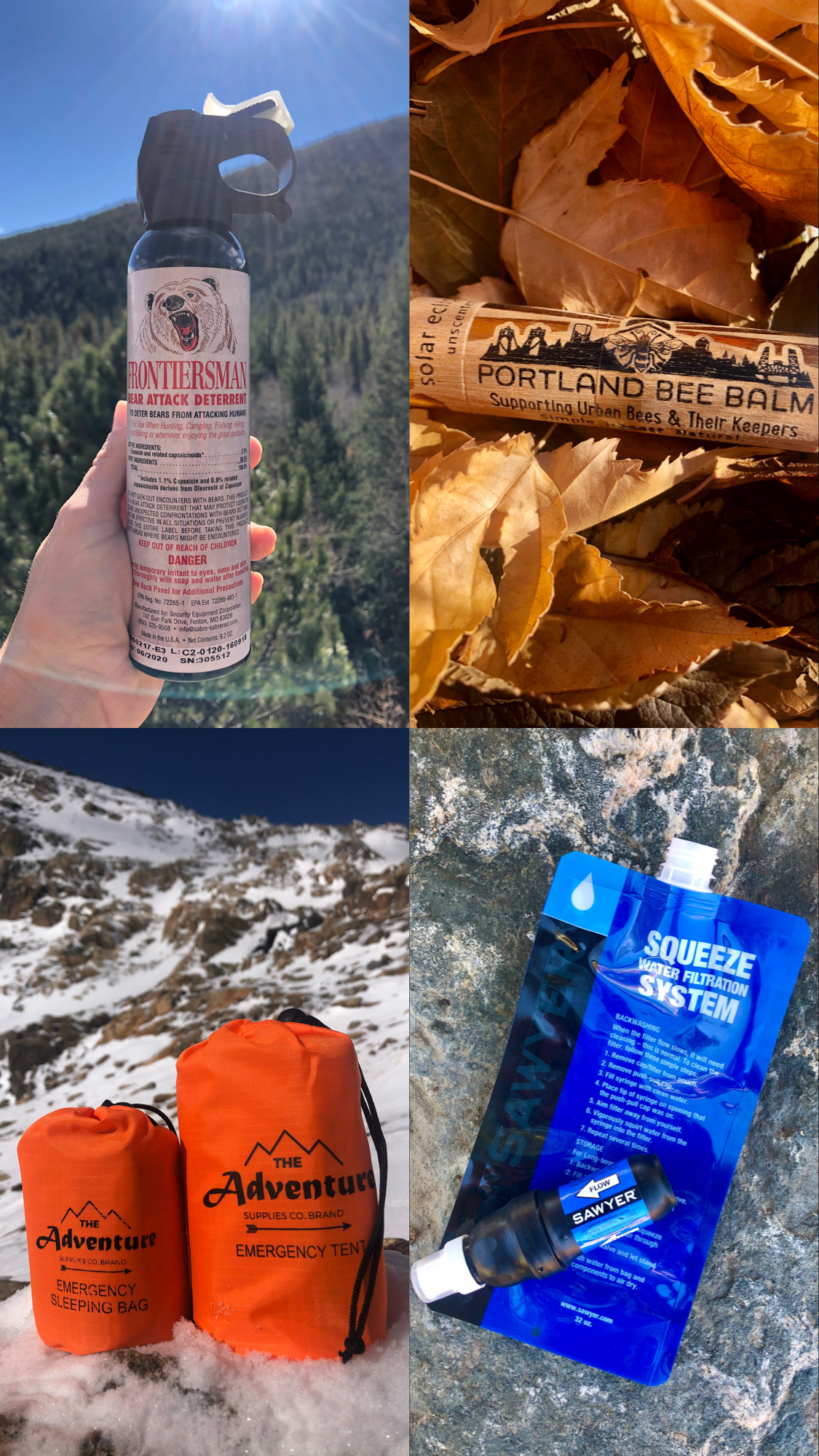
We’re focusing solely on PREPAREDNESS by listing the favorite items WE personally always keep in our packs when outdoors!
By Jennifer Mihlbauer-Schiel & Jolene Stewart
I can’t count the times I’ve hunted random blogs for the Holy Grail of MUST HAVES on the trail—only to feel like I’ve entered a curated space of advertisements. Is it just me? Call me a complainer, but I’ve also encountered lists too generic to be of any use. Well this post is in direct response to both!
Full disclosure, this post was prompted by our friend Jolene’s mishaps in the desert back in October 2021, although we’ve all probably got a similar tale to tell. Her experience confronted the assumption that our safety is always guaranteed on the trail—(umm, it’s not)—thus preparedness is key!
To set the stage, Jolene and friend spent an unassuming Sunday on what they thought would be a lovely autumn hike in the “Red Rocks Country” of Southern Utah. What should have been an effortless, albeit unfamiliar trail, turned excruciating when they lost their way after encountering a wash. “It was a total freak-out moment” that extended their dessert hike an ADDITIONAL two hours!
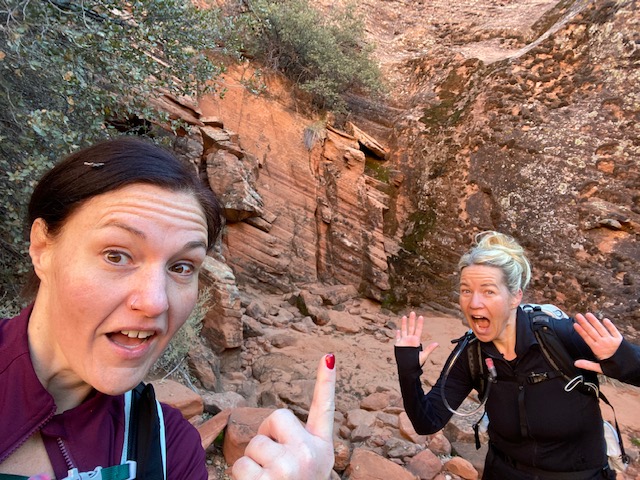
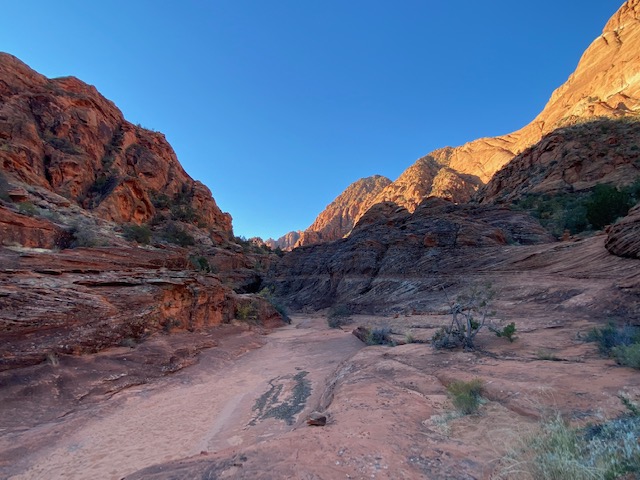
As panic set in, they searched for anything familiar amid the rocks and sand, finding themselves in some treacherous territory under the blazing sun. They dangerously traversed slot canyons and boulder fields, and slid down 10-foot rock faces in an effort to intercept the marked trail they had lost. Luckily no bones were broken in the process and they had adequate water with them. BUT the list of “what if’s” still runs through Jolene’s mind.
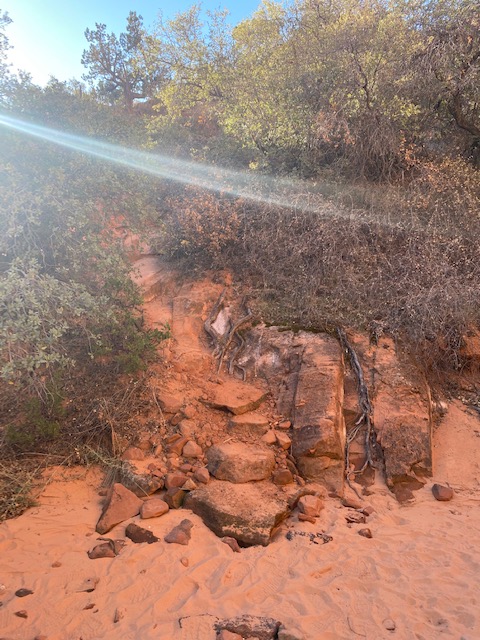
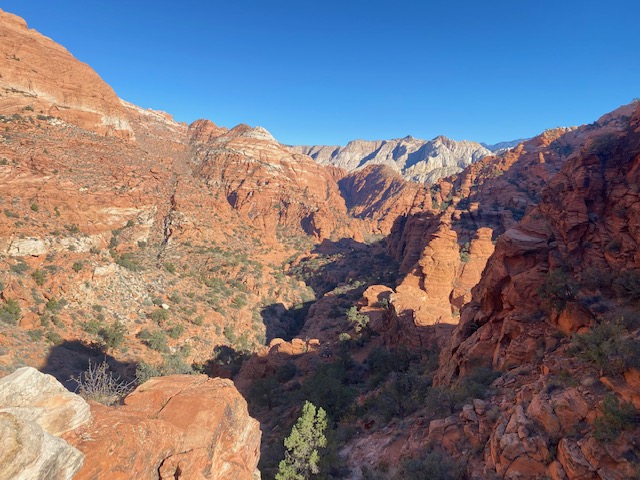
So after two extra miles of roaming, Jolene and her hiking buddy finally struck luck— or an answered prayer— when they finally stumbled back onto the trail. They were wiped of energy, but elated to have made it to safety without dire consequences. Unbelievably, a week later, they were back out on the same trail, rehashing their missteps…luckily this time they completed the hike victoriously (and with the glorious views to prove it)!
But the unfortunate reality is people get lost, seriously injured or die on the trail every year (about 400 deaths annually in America). I’m reminded most recently of the beautiful young family with their dog who mysteriously died at camp in California. Sadly it was ruled they ultimately died of excessive heat, which resulted from a lack of sufficient water. A preventable death.
It seems as a country, we’re entranced with stories like these, or others about lost hikers, animal attacks, or hikers who have tripped and fallen off cliffs, etc.. Some survive, while others parish. For those who meet their ultimate fate on the trail, these unintentional deaths generally stem from:
>Lack of Knowledge,
>Lack of Experience
> Poor Judgement
>Over Confidence
At least Jolene and her friend were alive, yet she couldn’t help but wonder…had they been more prepared, could their troubles have been avoided? Yup!—at least this was Jolene’s reckoning. Surly it would have at least provided added peace of mind.
This experience had Jolene and I chatting about what hikers like us pack for those “just in case” moments. This conversation led to us compiling a list of TRUSTED, GENUINE recommendations from our network of trail-loving friends below (i.e. No Ads or kickbacks from companies, just our personal favorites!)…
LIST of “MUST HAVE” Safety/Preparedness Items:
(according to our trail-loving friends)
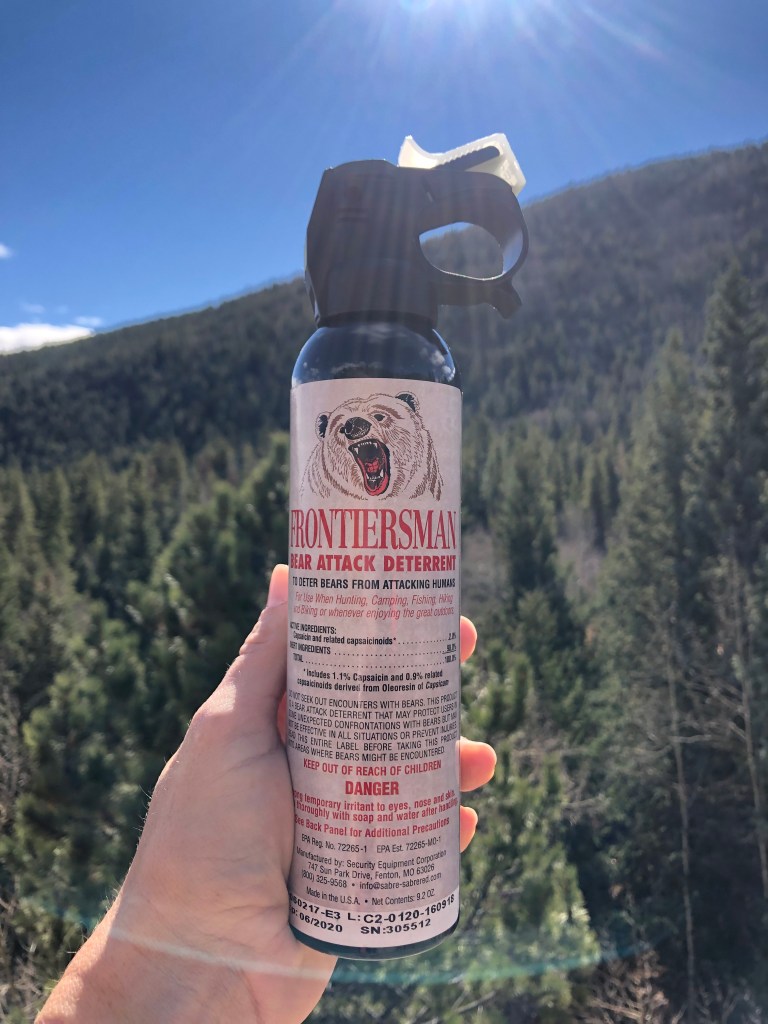
*Bear Spray and Whistle—“as woman who often solo hikes, the bear spray works just as effectively as pepper spray on aggressive animals or people.”
I’ve never compared brands, but if you’re into that, this article may help on which Bear Spray to buy according to wildlife biologist with Colorado Parks & Wildlife https://www.tripsavvy.com/best-bear-spray-4160416
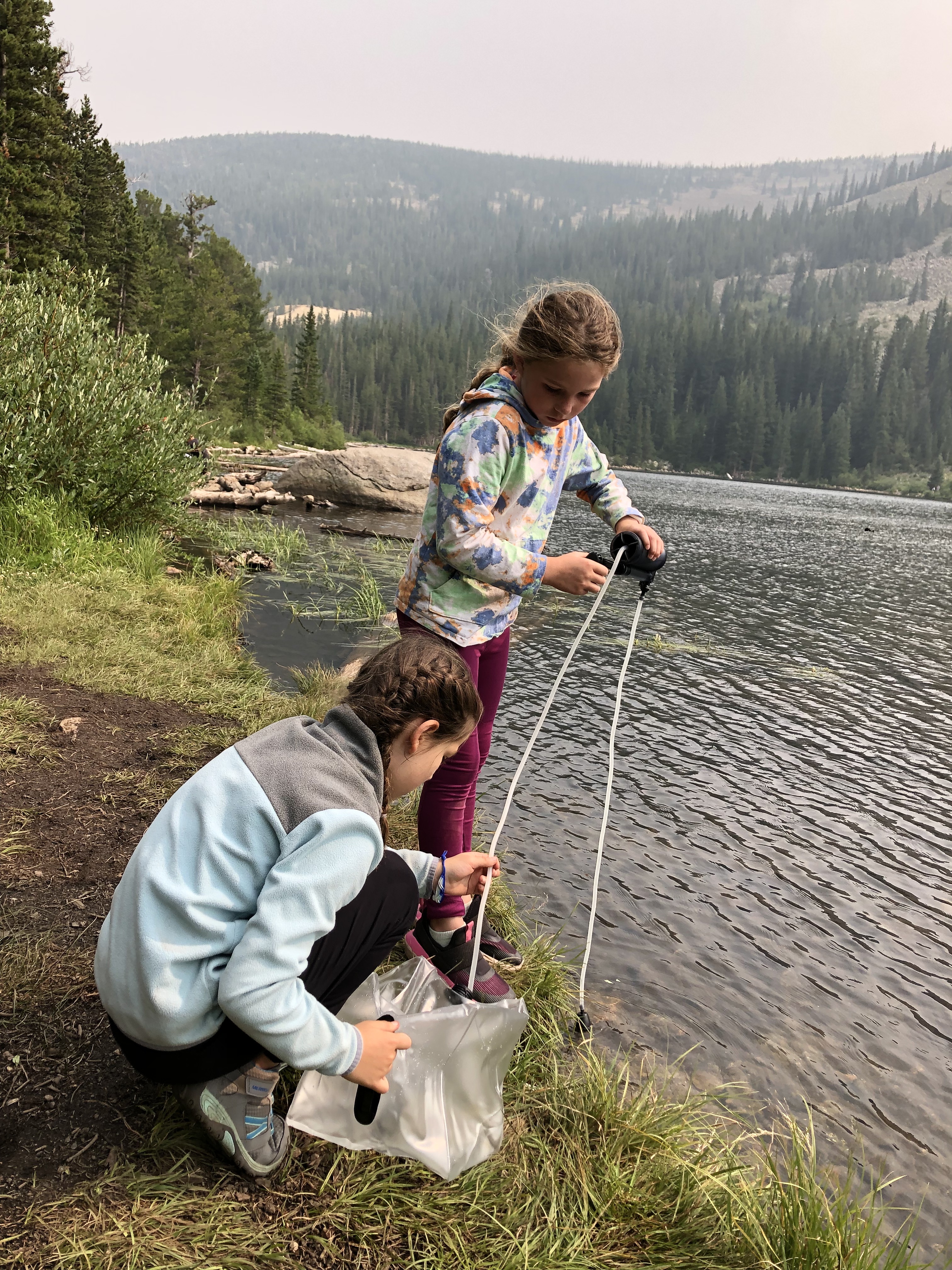
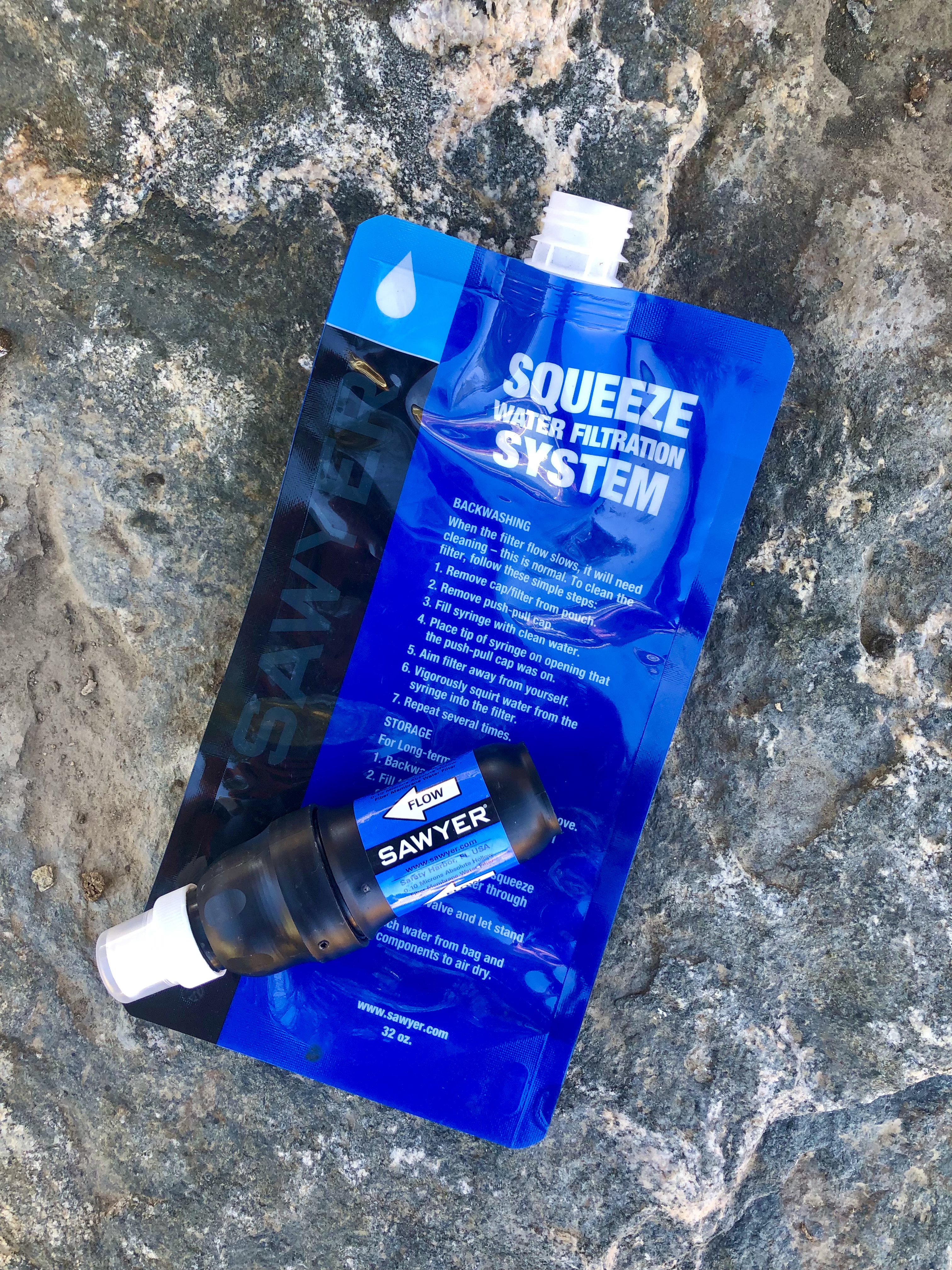
*Water Filter and Extra Water—“always prepare with more water than you need (those of us in the West should know this), especially if there aren’t water sources available (lakes or streams). On long hikes or backpacking trips, I always carry a water filter (you may opt for germicidal tablets too). Below are the ones I have…”
-Lightweight filtration system for hikes: Sawyer Mini https://www.sawyer.com/products/mini-water-filtration-system
-Heavy-duty filtration for backpacking (you can filter gallons in a relatively short amount of time, plus even the kids enjoyed doing the pumping): Katadyn Pro Hiker https://www.rei.com/product/116363/katadyn-hiker-pro-clear-microfilter
-Germicidal tablets: Potable Aqua https://www.amazon.com/stores/Potable+Aqua/page/10D5A892-EFE4-4D8B-879A-79E046A5FFA7?ref_=ast_bln
*First Aid Kit– “there are lots of options you can buy at outdoor retailers specific to hiking/camping, OR you could also create your own. I always supplement mine with plenty of medication (Benydril tablets recently came to our rescue on a backpacking trip when my daughter experienced an allergic reaction). Always remember to refill what you use when you get home!”
*Layers– “so many who come to Colorado get ‘weather whiplash’—they don’t realize the weather can change 40-degrees in a matter of minutes. Very realistically it could feel like summer at the trailhead, but the summit be snowy and windy. Always have an extra jacket in tow if you’re hiking at higher elevations, and a beanie and gloves couldn’t hurt if you’re above tree-line.”
*Compact Emergency Tent and Blanket– “thankfully I’ve never had to use these, but my husband has, and I’ve heard one too many stories about people getting caught in unexpected storms on 14-ers or elsewhere. There are plenty of options, all are compact, lightweight, and claim the ability to retain 90% of your body heat.”
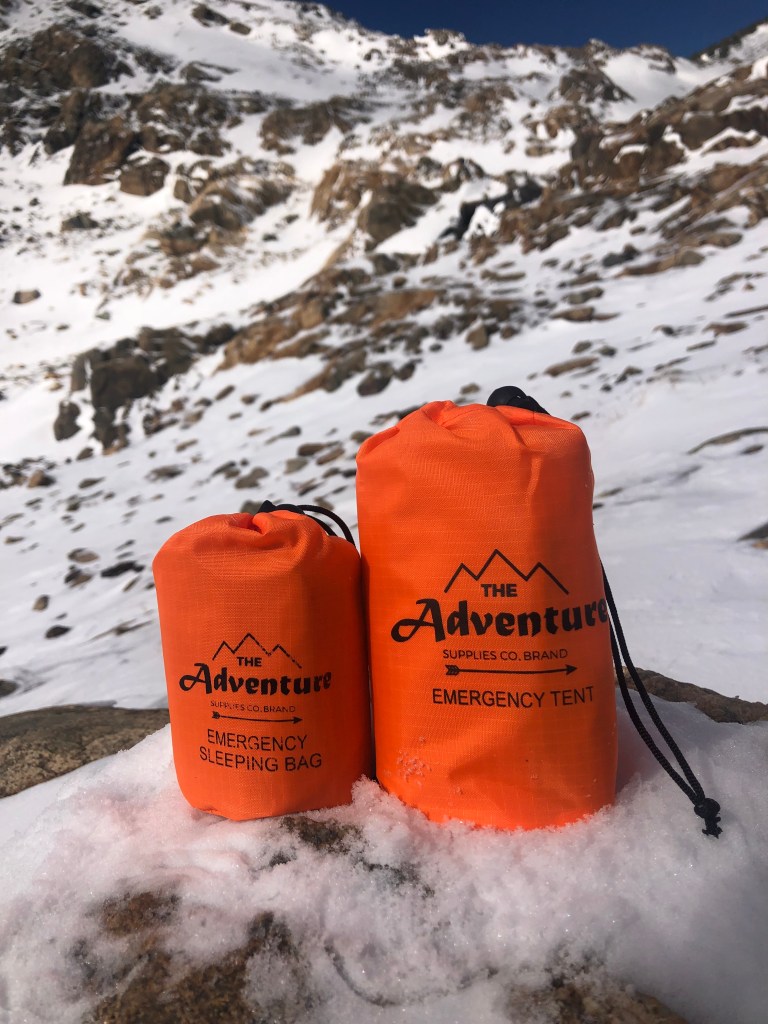
https://www.bearhard.top/products/emergency-tube-tent-for-2-person and https://www.bearhard.top/products/emergency-sleeping-bag-1pack or blanket https://www.bearhard.top/products/bearhard-heavy-duty-3-0-emergency-blanket
*Extra Snacks– “protein bar, nuts, or frankly anything edible in an emergency. If you’re like me, you’ll overpack all the goodies—or even attempt a charcuterie.”
*Sun Protection– “bring your hat, sunblock, and SPF chapstick cause for every 1,000 feet of elevation you gain, the intensity of the sun’s rays increase 4%. At mile-high in Denver we experience UV exposure approximately 25% higher than those at sea level. Imagine what it is on a mountain!”
So I personally love Alba Botanica products because their easy on my skin, as well as coral reef friendly (AKA not detrimental to the fragile ecosystems), and they’re biodegradable. https://www.albabotanica.com/products/category/sun/
As for SPF chapstick, I’ve tried quite a few and always disliked the taste. But I finally hit gold with Portland Bee Balm w/ SPF15. It’s made by a sustainable, family-run business in Oregon with bees at the heart of its business model. https://portlandbeebalm.com
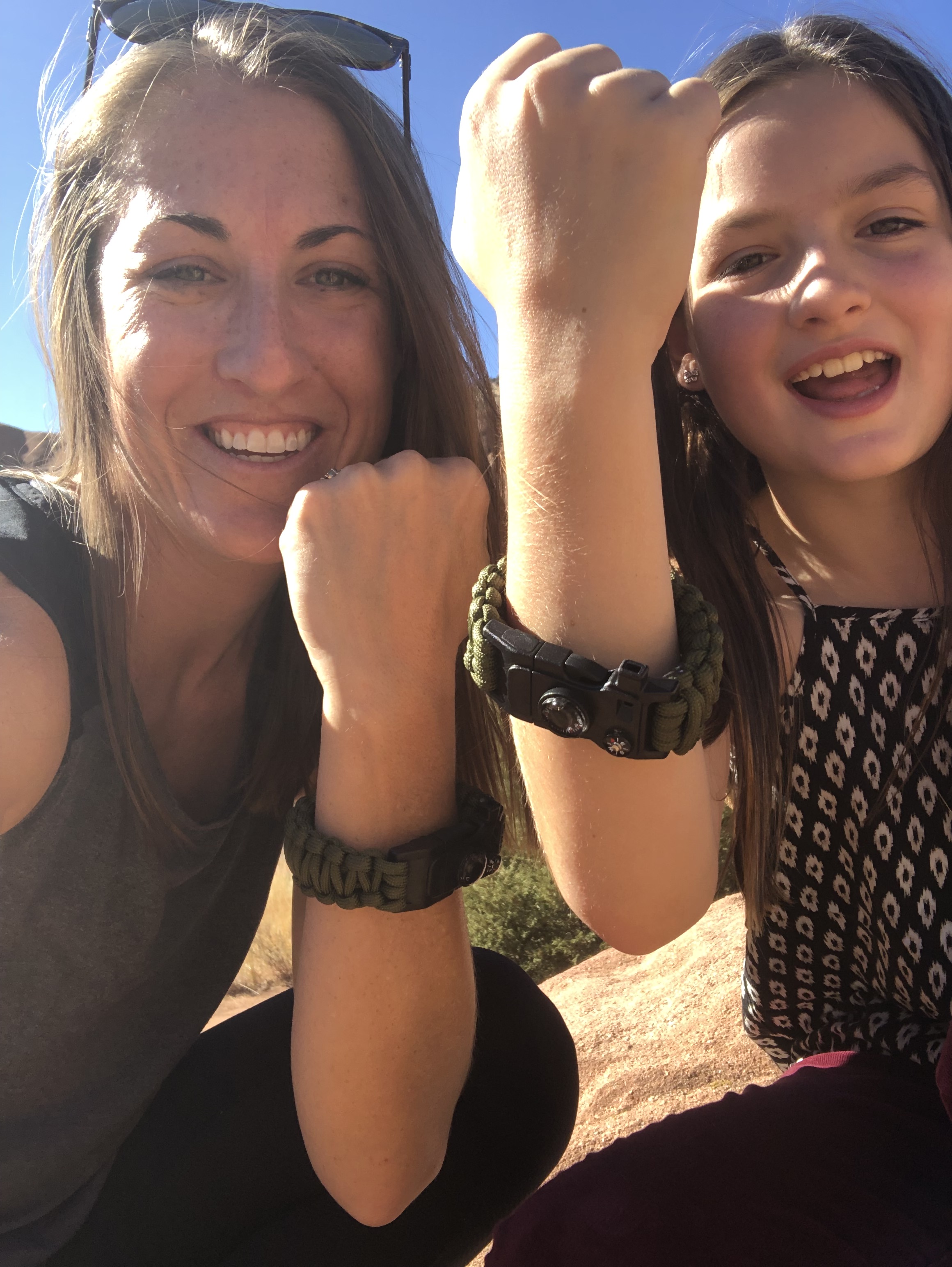
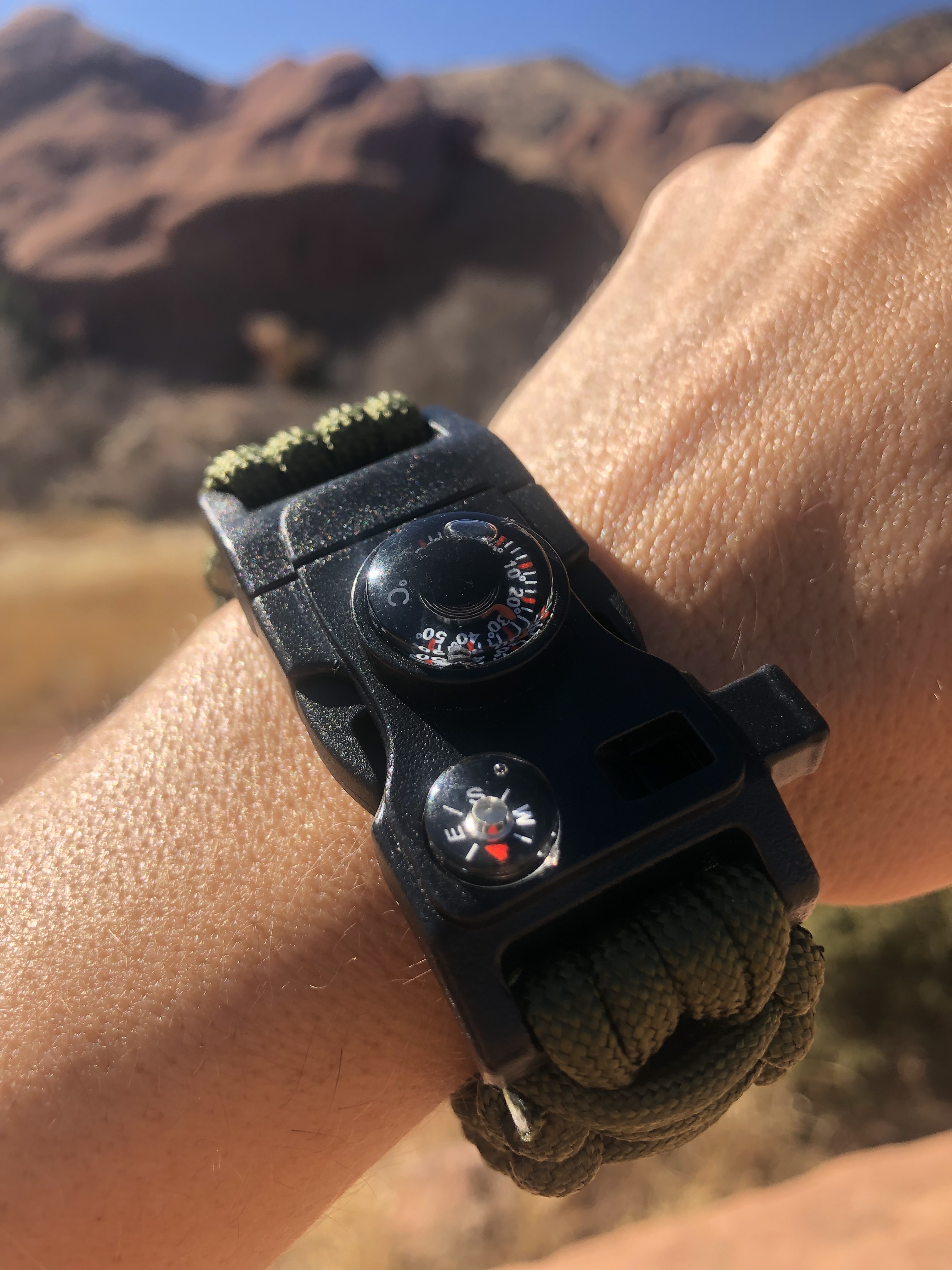
*Paracord Bracelet– “this is my favorite!! It doesn’t have to be fancy, but I love the 15-in-1 bracelet that is just as cute as it is survivalist in nature. I recently had to use this bracelet for the cord after forgetting to pack a thin rope to hang our food out of range from bears on a backpacking trip, but it has a zillion other uses too, like tourniquets, etc. The bracelet also comes with a Built-In Whistle, Flint Fire Starter and Scraper, Multifunction screw driver, Thermometer and Compass.” https://www.stealthangelsurvival.com/collections/paracord?gclid=Cj0KCQiAmpyRBhC-ARIsABs2EArV1j-Vzg6URJ3NLL5VZePaTsnX__UMHd9bZzds3yypn7YPUlHzsYIaAtVjEALw_wcB
*Map– “I generally always have a downloaded version on my phone, but that does leave me susceptible to the limitations of battery life, etc. AllTrails App and MapMyHike are two apps I use regularly, but for backpacking or venturing far into the backcountry, make sure you have a tangible map with topographical features. If you’re willing to splurge, invest in a GPS navigator.”
*GPS & Satellite Communicator– this is what a Search and Rescue professional suggested, but we also know some thru-hikers who swear by this…but be forewarned, they’re expensive. They have navigation aids and maps, and an interactive SOS trigger for 24/7 search and rescue with two-way messaging. https://www.garmin.com/en-US/p/623975
*Travel phone charger- “At very least, alleviate the stress of running out of battery. Try to find a lightweight and compact one”
*Matches / Fire Starter- “I always carry a matchbox in a ziplock to ensure it’s dry. Some prefer to even carry flint.” Note the 15-in-1 Paracord bracelet mentioned earlier has flint attached.
*Tools– “having a multitool, knife, or wire saw have come in pretty handy.”
*Duct Tape- “there have been countless times when duct tape has saved us…hiking boots that have started falling apart mid-trail, rips in tents and bags, etc. I don’t take a whole roll, but I do take a hand-rolled yard or two.”
*Headlamp / Mini Flashlight- “I always travel with a headlamp since I opt for sunrise hikes—I’m often at the trailhead before light. But it’s useful for evening hikes that run later than expected too.”
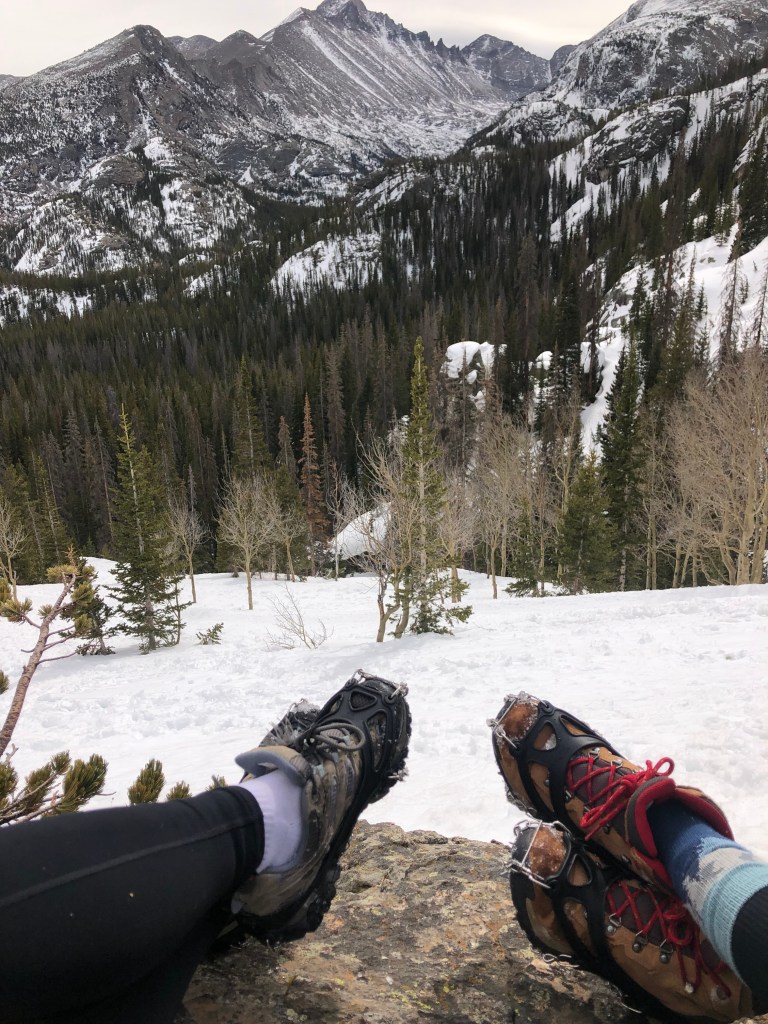
*Microspikes- “for winter months in the high country, count on the trail being slick. Microspikes (aka Campons or Ice Cleats) help you maintain traction and grip on snowpack or ice. It’s actually quite amusing watching others who aren’t wearing them as they slip and slide in their regular hiking boots or tennis shoes. They’re always commenting, ‘I need a pair of those…’ as I pass by.”
AND lastly, ALWAYS…
-Double check your provisions
-Check the Weather app for where you plan to hike.
Note- in the Spring and Summer months lighting and thunderstorms are like clockwork along the Front Range of Colorado. They arrive in the early afternoon, so to avoid them, going early. But if you do happen to get stuck in a thunderstorm, seek shelter immediately. If no shelter can be found, try to find a cave, ditch/low point, and crouch as low as possible. Avoid standing under/near a tree or in an open area (field or on a body of water). https://www.weather.gov/safety/
-Tell a friend/family where you’re hiking. I always send my husband the AllTrails link for the specific hike, along with my anticipated time home.
-Don’t engage wildlife…Keep it wild.
-Leave no trace…like my mom always said, “always leave the place better than how you found it.”
-If you get lost and don’t have cell phone service, you should still be able to make an emergency 911 call. However, if that fails, I’ve heard a clever life-saving measure is to change your voicemail message on your cell. Even if you have no service, apparently it will update. Leave pertinent information regarding your location and condition, with hopes rescue crews will find you.
-At High elevation- if you start to feel dizzy or sick, seek lower elevation immediately. Temperature can change drastically too, don’t be alarmed by a freak snow in Summer at the summit.
Anything we missed or has been a godsend for YOU in the wilderness?
 Trading for Trails